Monday, March 25, 2013

THE MAGALIESBERG


The Magaliesberg is a very old mountain range. Two and a half to two billion years old. About half the age of the Earth itself. One hundred times older than Mount Everest and seventeen times older than Table Mountain!

What happened is that a large piece of the Earth’s crust, 140 km long broke loose and tilted toward the North. In this picture taken from the top of Voortrekker Monument one can see the oldest tilt in the foreground, the green little hills across the motorway. The second tilt lies just behind the Pretoria city bowl, these are the Daspoort Rand and Meintjieskop on which the Union Building are built. The distant range at the back are the Magaliesberg Mountains that lie beyond the Moot (the Moat) area separating Pretoria from the Pretoria North area.


This picture from Wikipedia shows the Magaliesberg tilt very well. 
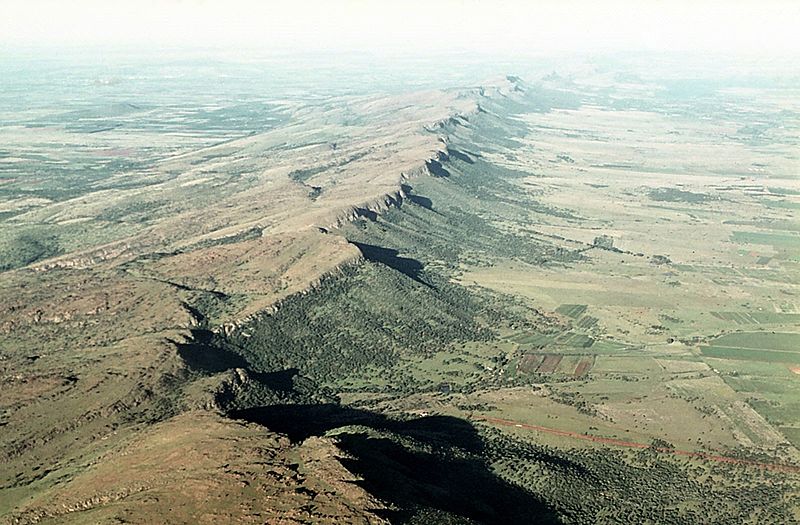

The northern part of the tilt plunged deep into the Earth’s mantel and magna filled a lake 140 km long and about 100 km wide. The tick layer of molten magna was at about 1,600 degrees and cooled down slowly. Different minerals solidify at different temperatures. As a result the platinum group of metals solidified in a reef, the Merensky Reef at what is now about 500m below the surface. Behind the Magalies lies 80 percent of the World’s known platinum resources, of which 60 percent of the World production is mined. With the platinum lies 70 percent of the World’s know chrome resources, fro which 50 percent of the World’s production comes. This is smelted in large chrome smelters to produce stainless steel for export to mainly Germany, China and Japan.

With this lies 95 percent of the World’s known vanadium, that is use in the hardening of aluminium fuselages’ in modern aircraft and spacecraft!

Truly, the Magalies produces South Africa’s new gold!


Friday, January 11, 2013

Pilanesberg always has something special at every visit


It is not only the big five in the Pilanesberg that can enthral and engage your attention completely. On a tour to the park on the 3rd of January a visitor was overheard at the bird hide at Mankwe lake saying: “This place is fantastic. We have seen more here in a morning than in a week in the Etosha”.

Some things, big and small, beautiful and not so good looking, that caught our eye were:


The bright Red Bishop weaver at the lake.


Here we also saw the longest water monitor (leguane) I have ever seen, large terrapins basking on a log, a baby crocodile, and a kingfisher dive bombing a small fish in the water.

A baby zebra curiously came up and smelt our vehicles front tyre. It might have been the smell of the elephant pooh we drove over earlier that caught his interest.


A family of warthogs, dad mom and six brothers and sisters. The only pig that avoids forests and lives on the savannah, it grazes grass. The litters are usually 3 to 4 piglets, so this was an exceptionally large litter.


One is always in awe of the majestic size of a giraffe. Look how the bouwildebees (gnu) is dwarfed by this female giraffe!


Springbok used to roam the drier western parts of South Africa in large herds with migrations larger than the Serengeti, hence the Afrikaans name ‘rebuke’. Pilanesberg is a transition zone between the western savannah and the bushveld. This makes it the only park in South Africa where both the springbok and the impala occur naturally.


Monday, November 5, 2012

Pretoria; The Jacaranda City


Once a years the city bowls becomes awash with lilac, the city Jacarandas. The first two Jacaranda trees were imported from Brazil by Mr. J Ciliers in 1888 ~ 125 years ago. To put this in perspective gold was discover on the Witwatersrand in 1887. Johannesburg was only a mining town then and got its city status later.


Mr. Cilliers paid 20 pounds for the two trees. They still stand in the grounds of the Sunnyside Primary School in Rissik Street. Later he and his assistant Mr. Clark imported seed from Australia and propagated these in Groenkloof.
In 1906 they donated two hundred trees to the City of Pretoria on its 55 birthday. These trees were planted in Bosman Street and Arcadia Street.
By 2012 Mr Clark embarked on planting of Jacarandas in all the inner city streets. Up to today the City Council has planted 34,000 trees and there are 70,000 growing in Pretoria.


Some great places to go are; Becket Street where you gaze through a canopy of lilac; Sir Herbert Baker Street, the only street with a row of white Jacarandas; and the big tree in the grounds of Melrose House, really impressive.


Sunday, July 29, 2012

Cheetah run at De Wildt Cheetah Sancuary


A tour is well worth a visit, highlights are interaction with a cheetah, a game drive and for the energetic early morning risers the experience of a cheetah run!

The De Wildt Cheetah Sanctuary, started in 1971 on her parent's chicken farm by Ann van Dyk, has assumed a crucial role in the survival of many endangered South African species. Besides cheetah, the centre also contributes to the conservation of African wild dogs and Cape vultures.  

 In the last few decades the  De Wildt Cheetah Sanctuary has played a crucial role in the survival of the magnificent cheetah and it remains a crucial centre for breeding African animals that are on the brink of extinction. It is now a world-renowned research centre and well worth a tour. 

Besides South African cheetah rehabilitation, the centre has also successfully bred African wild dog, brown hyena and Cape vulture. Particular highlights include the breeding and release of captive-born, highly endangered African wild dogs into a natural habitat 

De Wildt Cheetah

Breeding pair of Wild Dogs


King Cheetah with siblings.
"Spot" the difference?

For tours and bookings go to www.tedsplacetours.co.za

Thursday, July 12, 2012

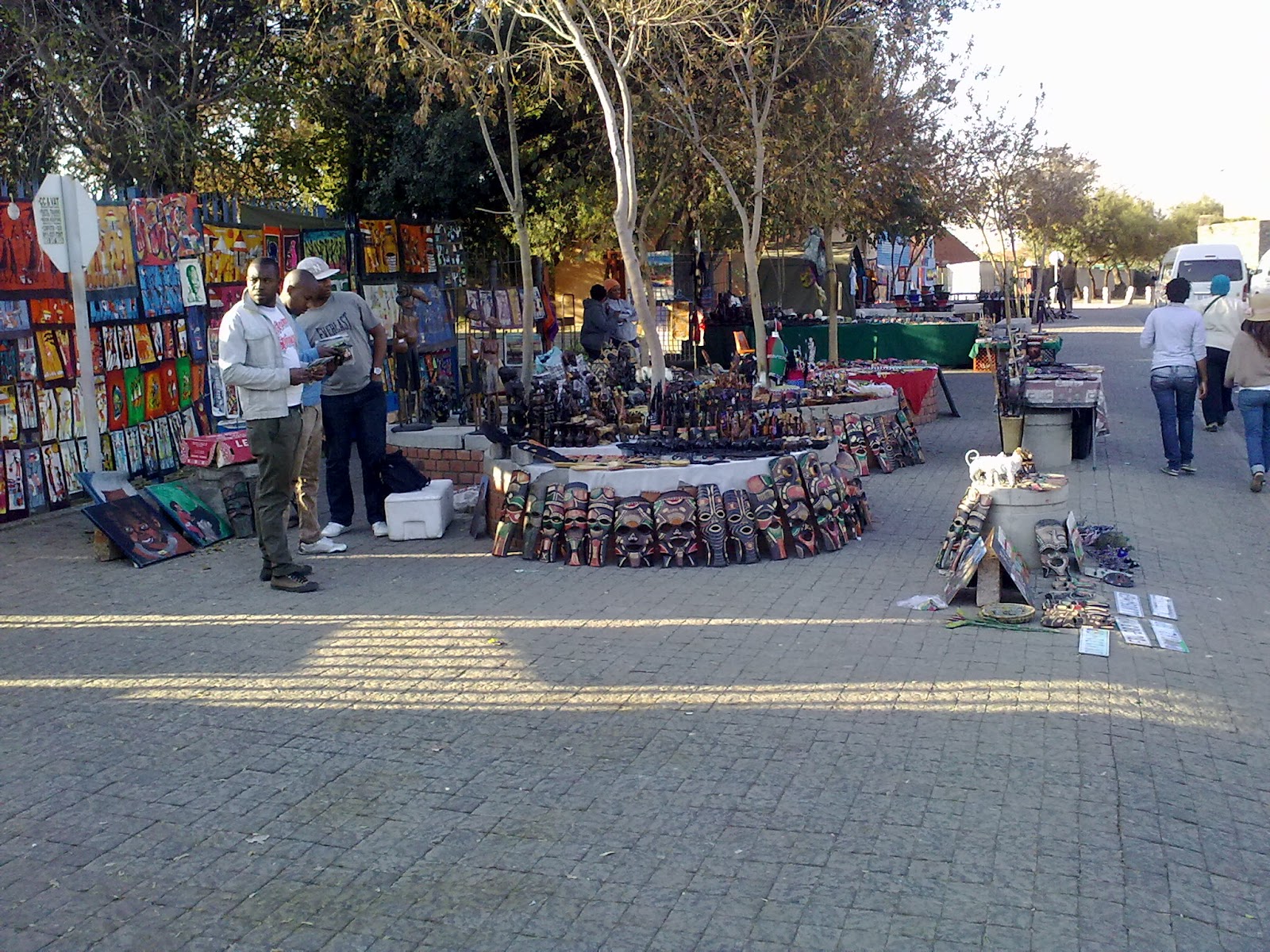
One is always struck by the vibrancy of life in Soweto. On a tour to Soweto I took these two pictures of the street vendors selling curios opposite the Hector Pieterson museum on a pleasant winters day. 


For tour details visit TedsPlaceTours


Thursday, April 26, 2012

Soweto on a Sunday in April

As a tour guide you realise that Soweto is like no other in South Africa. You can visit a township in the Cape but is not the making of the new democratic South Africa. Soweto is where it all happened. Passing the Chris Hani ~ Barangwanath Hospital tourist are amazed to hear that this hospital is modern and has performed operations like separating co-joined twins, kidney and heart transplants. To give you an idea of the sheer size, one hundered babies are born here every day! On your right you see the largest taxi rank in the world. Four thousand taxis. Where do you find your taxi you may ask?
Walter Sisulu Freedom Square is where the congress of the people met in 1955 to adopted the Freedom Charter. The ten pillars depict the ten pillars of the charter.
On a Sunday 2,000 people attend the service at the Regina Mundi Church. The church is a landmark in the armed struggle. The singing is beautiful. People harmonise spontaneously.
A visit to Soweto is incomplete without going to Vilikasi Street. Home of two Peace Prize Laureates , Nelson Mandela, and Desmond Tutu. On a Sunday it is awash with local enjoying a meal at Sakumsis.
Having enjoyed this vibrant city you return home.
Freedom Square
 Regina Mundi Choir boys

Sunday @ Sakumsi in Vilikasi Street

Monday, April 23, 2012

Pretoria in April


We went on a Pretoria city tour with the Mauders from Munich on a Saturday in April. What beautiful weather and some interesting things we saw. The large Walter Batis in the Pretoria City Hall is off the beaten track. It depicts the wild life around Pretoria. Church Square was its usual vibrant self on a Saturday. At the Union Buildings looking up at the war memorial and seeing one of the twin gods of war, Castor or Pollock, I was struck by the indigo blue South African sky.